The five kinds of AI partner
Every option below is the right answer for some companies. The table describes typical engagement models; individual firms vary.
| Partner | Best when | Watch for |
|---|---|---|
| Global consultancy (Accenture, the Big 4, McKinsey and peers) | AI is one part of a multi-country transformation, or your board expects a globally recognised firm | Long assessment phases, layered teams and fees sized for large enterprises |
| Large IT services firm | You need many engineers, long-term managed services, or AI on top of an existing outsourcing contract | Junior-heavy teams and AI work treated as one line in a wider contract |
| Boutique AI consulting and development firm (Solnix is one) | You want one specific AI system in production quickly, built by the people who designed it | Limited capacity for very large programmes; check they have shipped real systems |
| Freelancer or platform partner | A small, well-defined automation on one tool (for example a single chatbot or workflow tool) | Single point of failure, and recommendations tied to the platform they resell |
| Hiring in-house | AI is core to your product and you can recruit and keep a senior team | Time to hire and the cost of a team before the first system ships |
Start with what you actually need
- Advice only: you need to know where AI will pay back before committing budget. A short paid consultation or assessment is enough.
- A build: you already know the process (for example invoice handling or customer email) and need it working. Choose a partner that builds, and ask for a prototype on your data first.
- Both: most mid-market companies. Pick a partner whose strategists and builders are the same people, so the plan survives contact with your systems.
Eight things to compare
- 01
1. Who builds it
Ask for the names and roles of the people who will do the work, and whether the people in the sales call are on the team.
- 02
2. Time to a prototype on your data
A credible partner can show something working on your own documents or records within weeks, not after a long discovery phase.
- 03
3. Pricing model
Fixed price per milestone shifts delivery risk to the partner; time and materials keeps it with you. Know which you are signing.
- 04
4. Ownership
Get in writing who owns the code, prompts, evaluation sets, models and infrastructure definitions when the engagement ends.
- 05
5. Licences
Ask whether the proposal includes a platform or accelerator licence, and what it costs after year one.
- 06
6. Evaluation
Ask how they will measure accuracy on your examples before go-live, and what happens when the AI is unsure.
- 07
7. Human oversight and audit
For anything that touches customers, money or personal data, ask where people approve, and how every AI action is logged.
- 08
8. Data protection in your country
US: state and sector rules such as CCPA or HIPAA. UK: UK GDPR and restricted transfers. Canada: PIPEDA and, in Quebec, Law 25. Ask where your data will be processed and stored.
Red flags
- Big percentage savings promised before anyone has looked at your data.
- Case studies with no client name, no product you can see, and no way to check.
- A months-long paid discovery with no working software at the end of it.
- Your data used to train models for other clients, or vague answers about where it is stored.
- A proprietary platform you can't leave without rebuilding.
Questions to send every shortlisted firm
- Which systems like ours have you put into production, and can we see one working?
- Who exactly will build it, and how senior are they?
- When will we see a prototype on our own data?
- Is the price fixed per milestone? What's included and what isn't?
- Who owns everything you build, and is any licence required afterwards?
- Where will our data be processed and stored, and who on your team can access it?
- How will we monitor accuracy and cost after go-live, and who maintains it?
Where Solnix fits
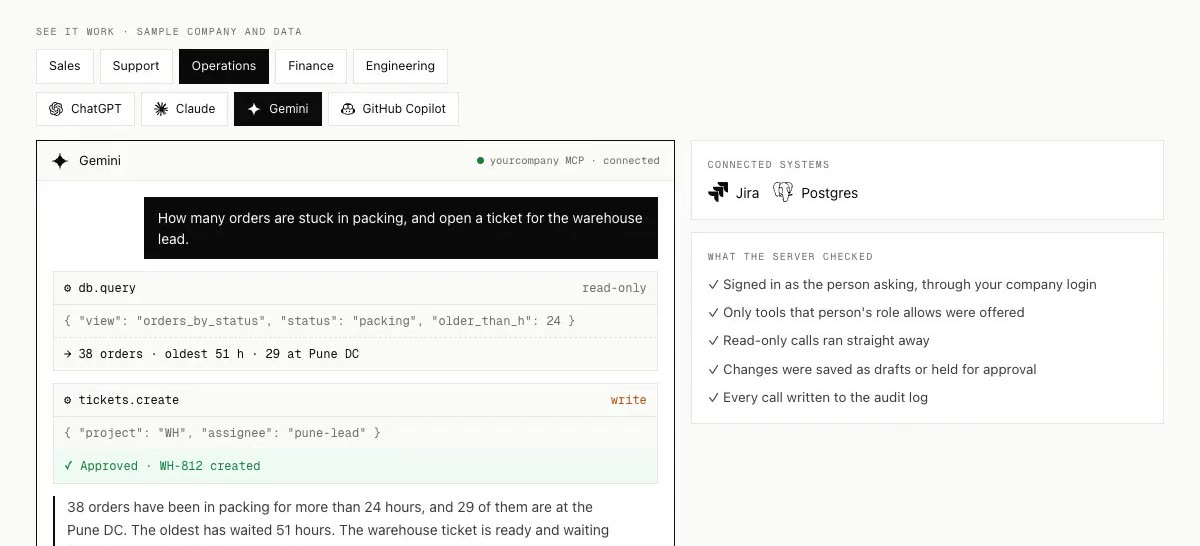
We work remotely with business and mid-market companies in the United States, United Kingdom, Canada and elsewhere. Consultations cost $100 (45 minutes) or $500 (90 minutes with a written plan), booked between 9 AM and 7 PM in your time zone, and the fee is credited toward a build started within 15 days. Builds are priced as fixed milestones, a prototype on your data typically follows within 3 to 5 weeks, and you own everything we build. You can try working systems we've built, such as AI Feeder and the Solnix Enterprise industry suites, before you talk to us.
We are not the right choice for a multi-year, multi-country transformation or if you need hundreds of people on site; a global consultancy is built for that.
Frequently asked questions
How do I choose an AI consulting firm for a mid-market company?
Decide whether you need advice, a build or both, then compare firms on who will build the system, how soon you'll see a prototype on your own data, whether the price is fixed per milestone, who owns the result, any ongoing licences, and how they handle evaluation, human oversight and data protection in your country.
Should a mid-market company hire a Big 4 firm for AI?
Sometimes. A global consultancy fits when AI is one part of a wider, multi-country transformation or when your board expects a globally recognised firm. For one specific AI system in production quickly, a boutique specialist is usually a closer fit.
How much does AI consulting cost?
It varies widely by firm and scope. Ask whether the price is fixed per milestone or time and materials, and what licences are included. At Solnix, consultations cost $100 or $500, and builds are quoted as fixed-price milestones before work starts.
Can a remote or offshore AI firm work with a US, UK or Canadian company?
Yes, if it fits your working hours and data rules. Ask when calls happen in your time zone, where your data will be stored, and how cross-border access to personal data is handled under your country's rules.
What should be in an AI consulting proposal?
Named team members, scope and success measures, a date for a prototype on your data, the pricing model, ownership of code and models, licence costs, how accuracy will be evaluated, where data is processed, and who maintains the system after go-live.